R1 500Electric and Hybrid Vehicles
Know what you are working on, what is still unknown, and who must decide next.
- 10 modules, 125 lessons
- 16 practical case studies
- AI tutor in every lesson
- Certificate on completion
R1 500Know what you are working on, what is still unknown, and who must decide next.
Navigating the arrival of modern electric and hybrid vehicles requires a shift in how you process information. You will learn to look past basic labels and badges to understand the specific type of technology you are dealing with. By moving away from guesses, you ensure that the details you record are based on evidence rather than unverified reports.
The course guides you through the inner workings of these machines, from the difference between auxiliary and traction batteries to how electrical energy is converted into movement. You will examine the critical role of the transmission and understand why a silent vehicle can still be a source of dangerous energy. This focus on mechanics helps you identify what is functioning correctly and what remains unknown.
Throughout the lessons, you will complete practical handover activities based on real scenarios involving damaged vehicles. You will practice writing clear reports that highlight the difference between a simple battery issue and a complex electrical fault. These exercises are designed to prevent common mistakes, such as assuming a blank dashboard means a vehicle is powered down and safe to work on.
Assessments are integrated into your learning journey to test your understanding through written exercises and case reflections. You will explain concepts in your own words, focusing on clarity and professional communication. These tasks emphasize that your primary responsibility is to observe and report accurately so that the correct decisions can be made for the next steps in the repair process.

10 modules · 125 lessons
Module 1
Module 1: An accident-damaged vehicle arrives
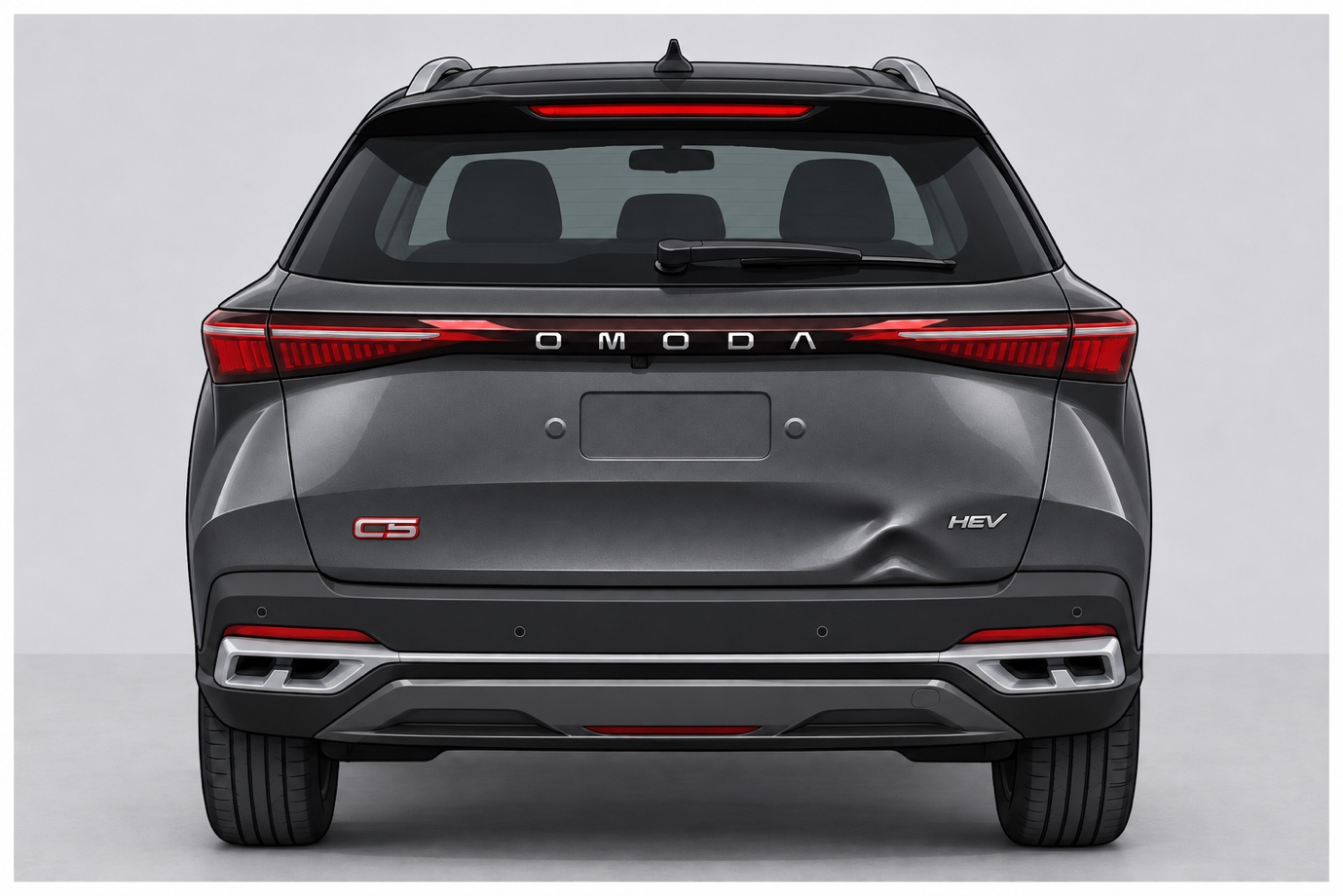
A grey Omoda is in a panel shop. Its rear badges say C5 and HEV. A label on its window says OMODA C5 Hybrid.
Module 2
Chapter 2: Petrol, hybrid and electric vehicles
These are fictional training illustrations. The badges help explain the categories; real vehicles may use different badges.
Module 3
Chapter 3: How electrical energy makes a vehicle move
Its battery stores energy. Its motor changes electrical energy into turning movement. Its trigger and control equipment regulate its operation.
Module 4
Chapter 4: The auxiliary battery and the traction battery
These questions prevent a guess from becoming the basis for the next action.
Module 5
Chapter 5: READY mode, shutdown and unexpected movement
Silence tells you that you cannot hear the engine. It does not establish what the electric drive can do.
Module 6
Chapter 6: Recognising hazards before someone gets hurt
The illustration above shows three responses: stop the task, move away when emergency signs appear, and call for help.
Module 7
Chapter 7: Receiving an accident-damaged vehicle
A vehicle arrives at the panel shop. The recovery driver wants to unload it. Reception needs a job number. The estimator wants photographs.
Module 8
Chapter 8: Safe access, parking and movement
The distance may be short. However, the team still needs to know whether the proposed method is suitable.
Module 9
Chapter 9: Charging and battery support
Which battery needs attention? What is causing the problem? Does this vehicle accept external traction charging? Has the accident affected the proposed activity?
Module 10
Chapter 10: Bringing the learning together
You have learned about different vehicles, their battery systems, operating states and hazards.
Does this course qualify me to work on high-voltage systems?
No. It is online awareness and knowledge training. It does not teach or assess practical isolation, testing, disconnection, charging or repair, and it does not give you employer authorisation for those tasks.
Who should take it?
Everyone who works in a panel shop: reception, estimating, valeting, parts, movement and technical staff, and supervisors who assign electrified vehicle work.
How is it assessed?
Each module ends with practice questions and a written activity. The final module adds twenty knowledge questions and three case studies, marked against fixed criteria with safety-critical errors flagged.
Keep CollegEd on your phone
Add to Home Screen